Aircraft Design is built around connected decisions. Engines, construction methods, wings and airframes can all change performance, viability and the trade-offs a company must accept.
31 de julho de 2026Atualização de DesenvolvimentoAircraft Design
Como as Escolhas de Componentes Moldam os Teus Aviões
O Aircraft Design assenta em decisões interligadas. Motores, métodos de construção, asas e estruturas podem alterar desempenho, viabilidade e os compromissos que a empresa terá de aceitar.
Aircraft Design is one of the central systems in Aircraft Tycoon. An aircraft is not a preset with a different label: it is the result of several technical and business choices working together.
The current Alpha estimates maximum speed, range, payload, safety and production cost while also checking compatibility, readiness, warnings and required modifications.
A confirmed model can return to the design process through a new revision, preserving the wider aircraft programme lifecycle.
A design is a connected system
Changing a major component can affect several outcomes at once. Engine choice matters, but so do construction method, wing configuration and airframe structure. The useful question is not “which component is best?” but “which combination best supports this aircraft’s intended role?”
Important comparison note: the two engine captures below also use different construction methods. Their figures represent the complete configuration shown, not an isolated engine-only test.
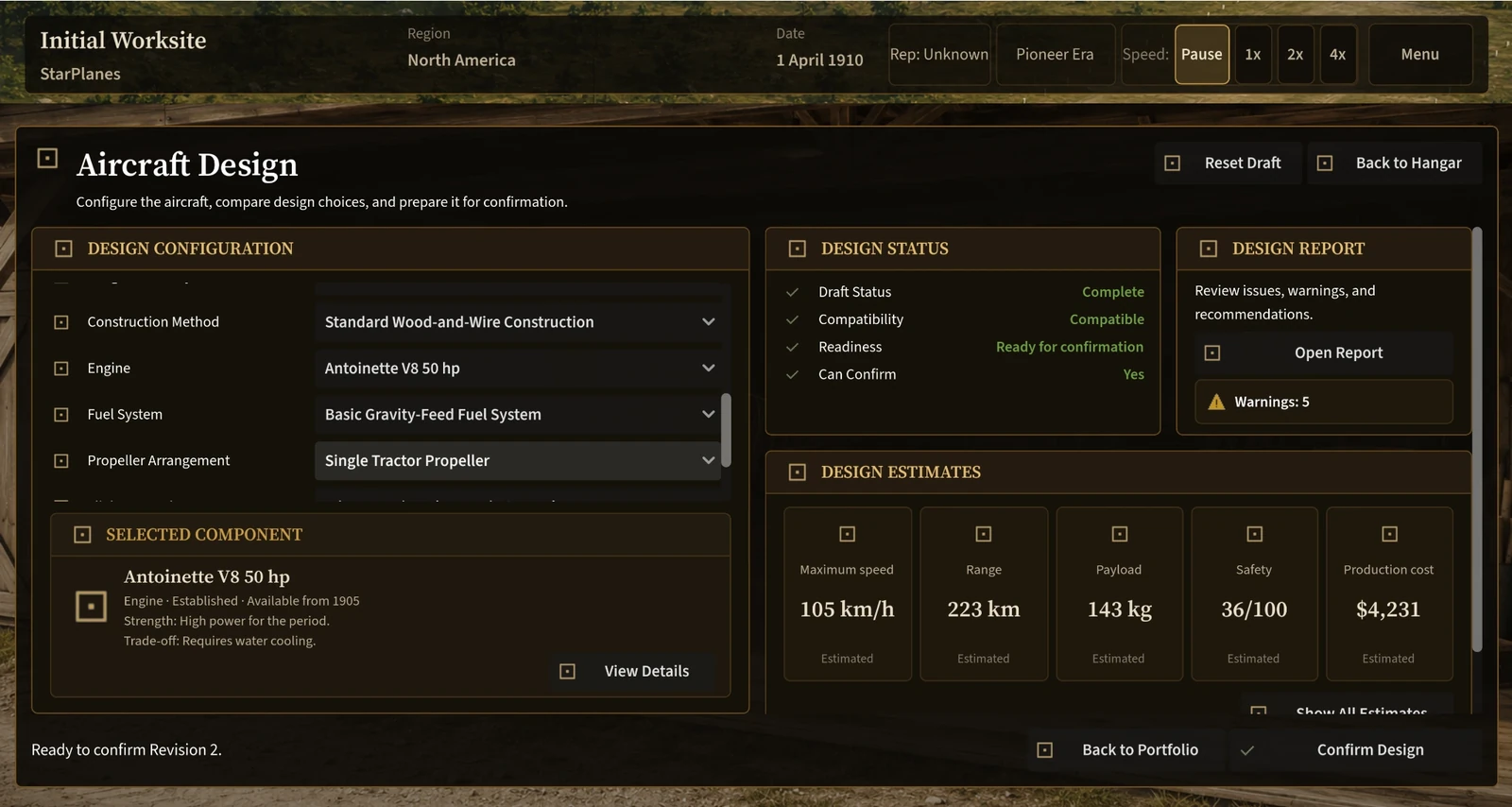
J.A.P. V8 45 hp with Light Wood-and-Fabric Construction: the draft is complete, but compatibility requires modification.Antoinette V8 50 hp with Standard Wood-and-Wire Construction: compatible and ready for confirmation.
Two configurations, different trade-offs
The first configuration reaches 105 km/h and 247 km of range, but carries 124 kg, records 31/100 safety and costs an estimated $3,999. It also produces seven warnings and one required modification.
The second configuration keeps the same estimated maximum speed at 105 km/h, with 223 km of range, 143 kg payload, 36/100 safety and an estimated production cost of $4,231. It is compatible and can be confirmed.
105 km/hMaximum speed
223–247 kmRange shown
124–143 kgPayload shown
31–36/100Safety shown
$3,999–$4,231Production cost
More than the engine
Wing and airframe choices can move the design in a very different direction. The Braced Biplane configuration shown below favours structural strength and payload, but accepts greater aerodynamic drag.
Braced Biplane with an Enclosed Wooden Truss Fuselage: 78 km/h, 403 km range, 172 kg payload, 41/100 safety and an estimated $3,829 production cost.
These are estimated Alpha values, and the presentation remains work in progress. The design goal is already clear, however: every choice should create a readable consequence rather than a purely cosmetic variation.
Aircraft Tycoon asks the player to balance technical ambition with compatibility, safety, production cost and the wider needs of an Aircraft Program.
This article adapts the Aircraft Design development update first published through the Aircraft Tycoon Steam community on 31 July 2026.
O Aircraft Design é um dos sistemas centrais de Aircraft Tycoon. Uma aeronave não é apenas uma predefinição com outro nome: é o resultado de várias decisões técnicas e empresariais a funcionar em conjunto.
A versão Alpha atual estima velocidade máxima, alcance, carga útil, segurança e custo de produção, avaliando também compatibilidade, prontidão, avisos e modificações obrigatórias.
Um modelo confirmado pode regressar ao processo de design através de uma nova revisão, preservando o ciclo mais amplo do Aircraft Program.
Um design é um sistema interligado
Alterar um componente importante pode afetar vários resultados ao mesmo tempo. O motor importa, mas também importam o método de construção, a configuração de asa e a estrutura. A pergunta útil não é «qual é o melhor componente?», mas sim «que combinação serve melhor a função pretendida para esta aeronave?».
Nota importante sobre a comparação: as duas capturas de motores também utilizam métodos de construção diferentes. Os valores representam a configuração completa apresentada, não um teste isolado apenas ao motor.
J.A.P. V8 45 hp com Light Wood-and-Fabric Construction: o draft está completo, mas a compatibilidade requer modificação.Antoinette V8 50 hp com Standard Wood-and-Wire Construction: compatível e pronta para confirmação.
Duas configurações, compromissos diferentes
A primeira configuração alcança 105 km/h e 247 km de alcance, mas transporta 124 kg, apresenta 31/100 de segurança e tem um custo estimado de $3.999. Produz também sete avisos e uma modificação obrigatória.
A segunda mantém a mesma velocidade máxima estimada de 105 km/h, com 223 km de alcance, 143 kg de carga útil, 36/100 de segurança e um custo de produção estimado de $4.231. Está compatível e pode ser confirmada.
105 km/hVelocidade máxima
223–247 kmAlcance apresentado
124–143 kgCarga útil apresentada
31–36/100Segurança apresentada
$3.999–$4.231Custo de produção
Mais do que o motor
As escolhas de asa e estrutura podem levar o design numa direção muito diferente. A configuração Braced Biplane apresentada abaixo privilegia resistência estrutural e carga útil, aceitando maior arrasto aerodinâmico.
Braced Biplane com Enclosed Wooden Truss Fuselage: 78 km/h, 403 km de alcance, 172 kg de carga útil, 41/100 de segurança e custo de produção estimado de $3.829.
Estes são valores estimados da versão Alpha, e a apresentação continua em desenvolvimento. No entanto, a intenção do sistema já é clara: cada escolha deve criar uma consequência legível, em vez de uma variação puramente estética.
Aircraft Tycoon pede ao jogador que equilibre ambição técnica com compatibilidade, segurança, custo de produção e as necessidades mais amplas de um Aircraft Program.
Este artigo adapta a atualização de Aircraft Design publicada inicialmente na comunidade Steam de Aircraft Tycoon em 31 de julho de 2026.
Official Steam page
Wishlist Aircraft Tycoon on Steam.
Follow development and add the game to your wishlist for future updates.
Página oficial na Steam
Adiciona Aircraft Tycoon à tua lista de desejos.
Acompanha o desenvolvimento e adiciona o jogo à tua lista de desejos para receber futuras novidades.